Climate story · Terre de Bas
Which season's fruits?
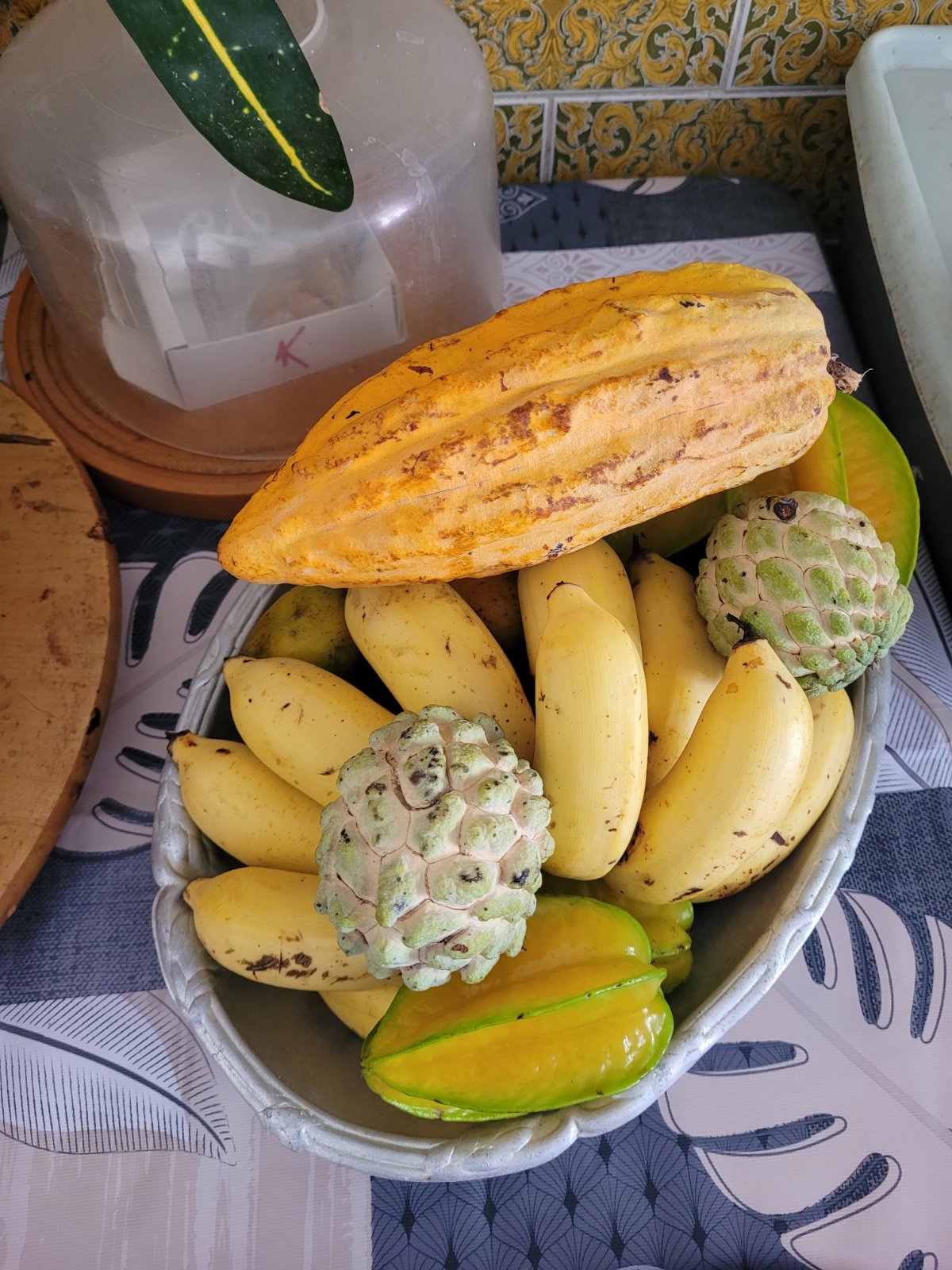
I’ve been thinking about what I could say regarding my island, Terre-de-bas, and the climate changes I’ve observed there. And many things came to mind. It must be said that the Caribbean islands—and islands in general—are particularly vulnerable to the elements and climate-related hazards. Living in Guadeloupe means living with the risk of earthquakes, volcanic activity, erosion, tropical downpours, periods of drought, and hurricanes. It also means grappling with issues of access: to water, to electricity, and to one’s own land. And to mention just one additional point, it ultimately means dealing with the issue of waste disposal.
Many aspects that are not necessarily known or mapped, despite having been studied.
But among the many topics I could have discussed, I chose one from everyday life for emotional reasons: fruits; a symbol and a constant companion for any Caribbean child. Fruit picked from trees in the wild, fruit stolen from neighbours as an act of childish rebellion, fruit given by the neighbours, grandparents, and great-aunts.
And you might ask, what does this have to do with climate?
As they say in continental France: “Il n'y a plus de saison ma petite dame"(There are no seasons anymore, my dear). And it’s true in Terre-de-bas too. Mango trees bloom in January and bear fruit as early as February instead of April; acerola cherries ripen in late February instead of May or June; Malay apples in March instead of May, and there are so many other examples.
Climate change is felt in our Creole gardens and on our plates (or, to be more realistic, on our juice-stained hands). It is affecting the seasonality of our fruits, vegetables, and crops.
And this is also the case for sugarcane cultivation (a colonial legacy but the foundation of Guadeloupe’s agriculture alongside banana farming) which is struggling due to dry seasons where it rains more and wet seasons where it’s too dry, according to experts.
For now, fruits are still here; in different seasons, but still here. And we’ll continue to eat it and share it, I hope. But the July quénettes will surely become a thing of the past for future generations. And the overall landscape of a large part of the archipelago could change completely.
The data behind this story: in Terre de Bas, the last ten years averaged +0.9 °C against the 1961–1990 normal; yearly rainfall changed by +20 %. See 75+ years of climate data for Terre de Bas →